

Mulching Mistakes We See Every Spring (And How to Fix Them)
- Austin Cowen
- Apr 13
- 2 min read

Every spring, mulch starts going down across Northwest Indiana—and unfortunately, so do a lot of preventable tree problems.
Mulch is one of the best things you can do for your trees… when it’s done correctly. But when it’s not, it can quietly cause stress, decline, and even long-term damage.
Here are the most common mulching mistakes we see—and how to fix them.
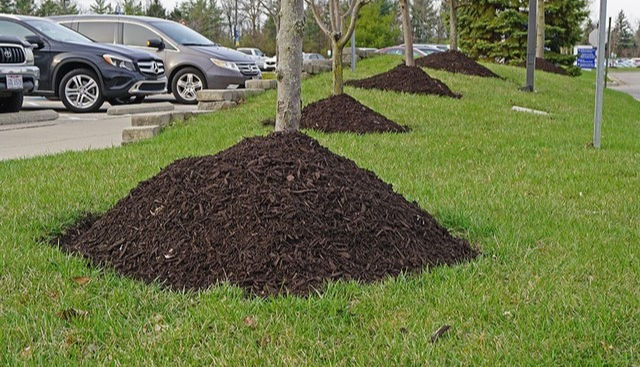
1. The “Mulch Volcano”
This is by far the most common issue.
You’ve probably seen it: mulch piled high against the trunk, forming a volcano shape.
Why it’s a problem:
Traps moisture against the bark → leads to rot
Encourages insect and disease activity
Can cause roots to grow improperly (girdling roots)
Suffocates the root flare
How to fix it:
Pull the mulch back so the base of the trunk (root flare) is visible. Trees should look like they’re “standing” in the soil—not buried.
2. Too Much Mulch
More is not better.
Why it’s a problem:

Limits oxygen to the roots
Holds excessive moisture
Can lead to root decline over time
How to fix it:
Stick to 2–3 inches of mulch depth. That’s all your tree needs.
3. Mulch Touching the Trunk
Even if it’s not piled high, mulch pressed directly against the trunk is still an issue.
Why it’s a problem:
Keeps the bark constantly moist
Increases risk of decay and disease
Creates a perfect environment for pests
How to fix it:
Leave a 2–3 inch gap between the mulch and the trunk—like a donut, not a volcano.
4. Mulch Rings That Are Too Small
A tiny ring of mulch around the trunk doesn’t do much.
Why it’s a problem:

Doesn’t protect enough of the root zone
Grass competes with the tree for water and nutrients
Limits the benefits mulch provides
How to fix it:
Expand the mulch ring to at least 2–3 feet wide for young trees—and larger for mature trees if possible.
5. Using the Wrong Type of Mulch
Not all mulch is equal.
Common issues:
Dyed mulch with unknown sources
Fresh wood chips that pull nitrogen from the soil
Poor-quality materials that don’t break down properly
How to fix it:
Use natural hardwood mulch or properly aged wood chips. These improve soil health over time as they decompose.
What Proper Mulching Should Look Like

2–3 inches deep
Wide, even ring around the tree
No mulch touching the trunk
Root flare clearly visible
Think: flat, wide, and pulled back from the base
Why Proper Mulching Matters
When done correctly, mulch:

Retains soil moisture
Regulates soil temperature
Reduces competition from grass
Improves soil structure over time
When done incorrectly… it does the opposite.
Not Sure If Your Trees Are Mulched Correctly?
Most mulch problems go unnoticed until trees start to decline.
We offer free tree health assessments, and we’ll check:
Mulch depth and placement
Root flare visibility
Soil conditions
Overall tree health
If something’s off, we’ll show you exactly how to fix it—or handle it for you.
Schedule your free evaluation today and make sure your trees are set up for a healthy growing season.


Comments